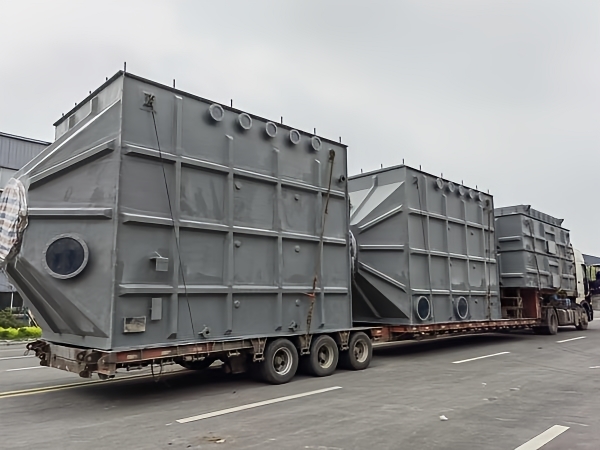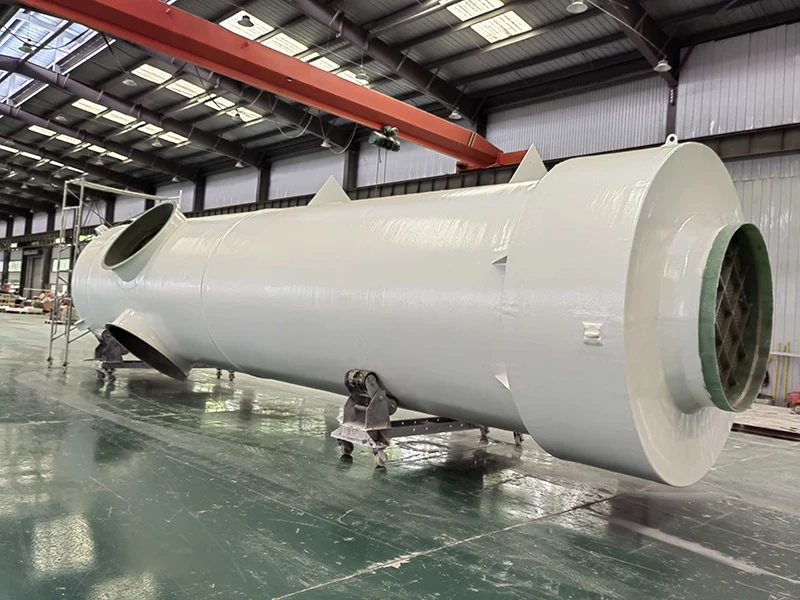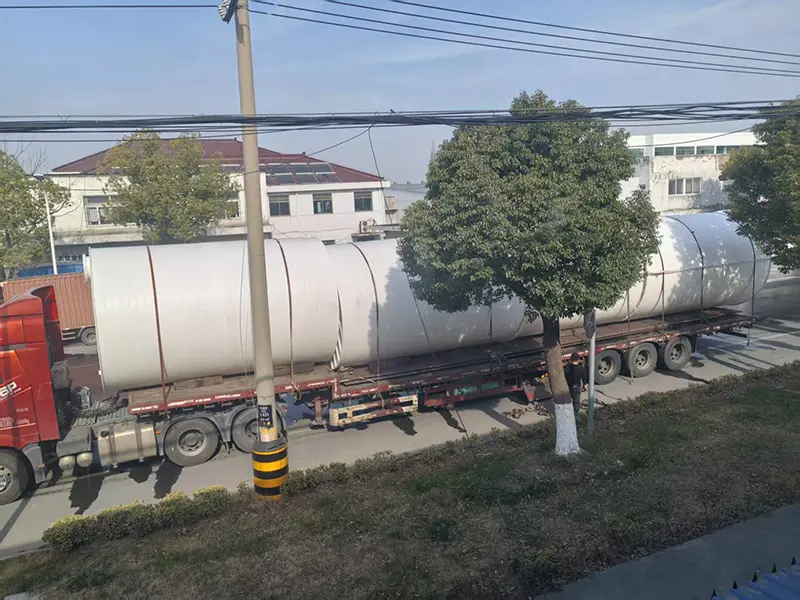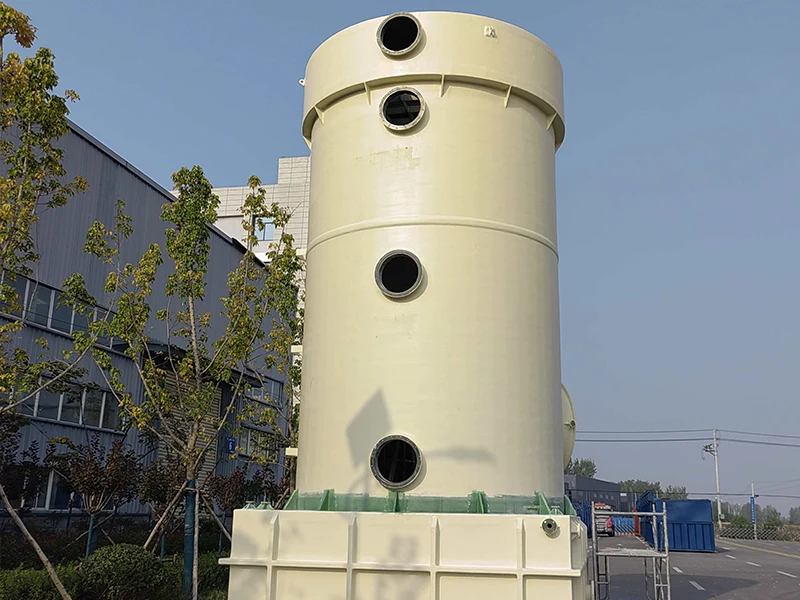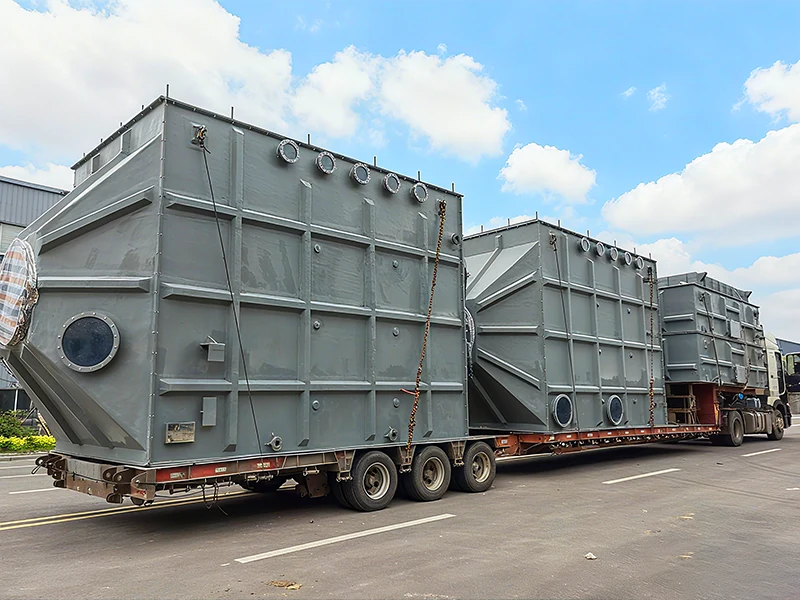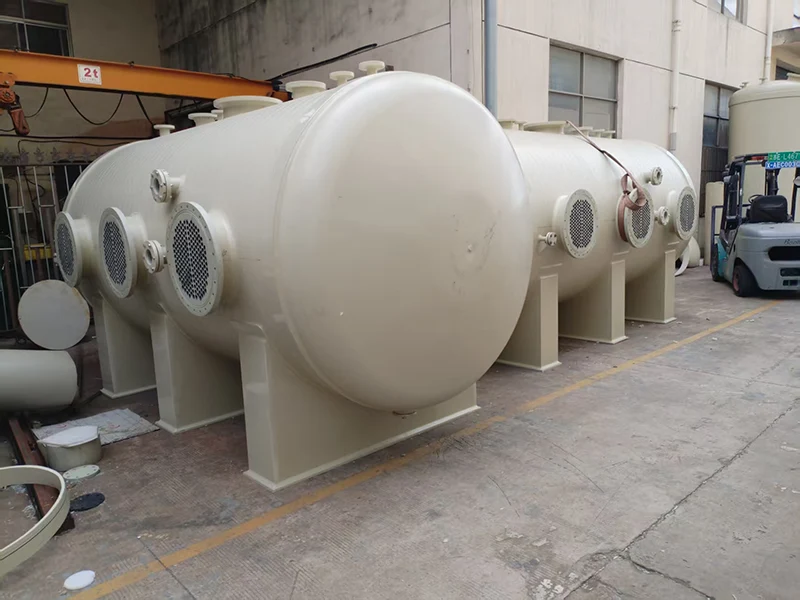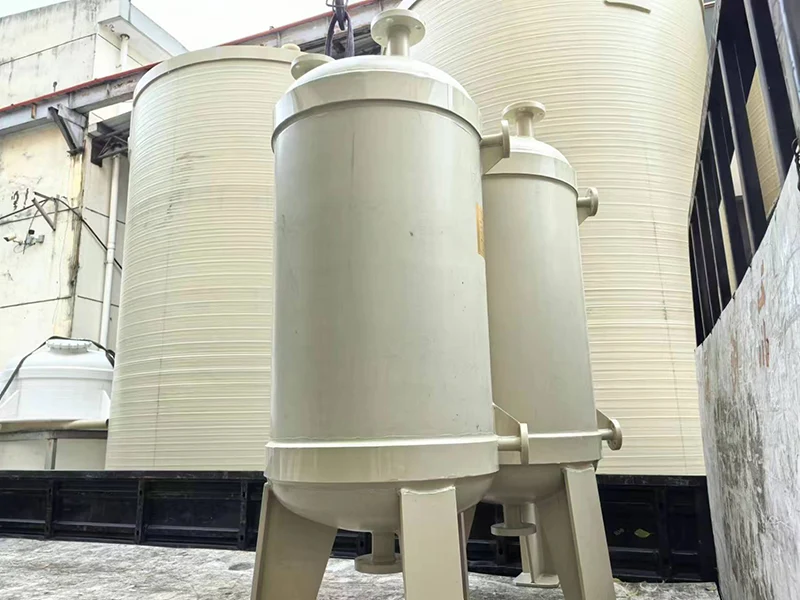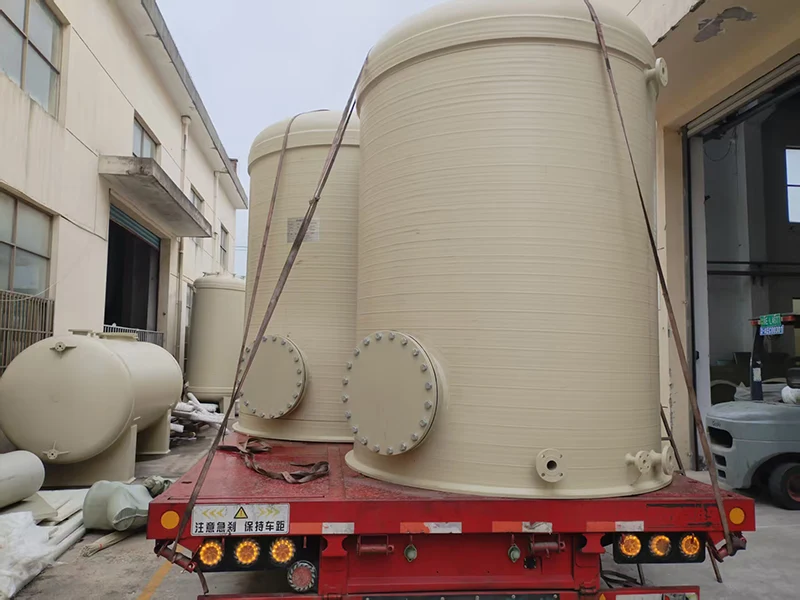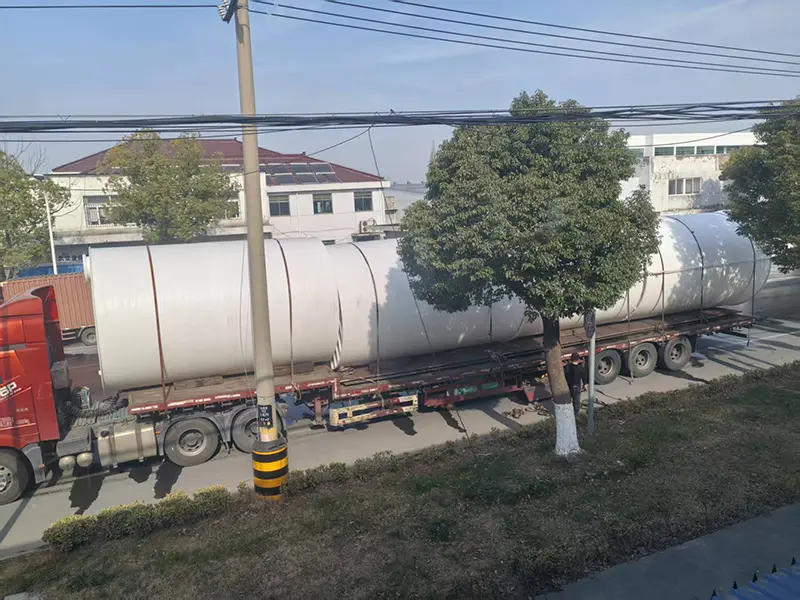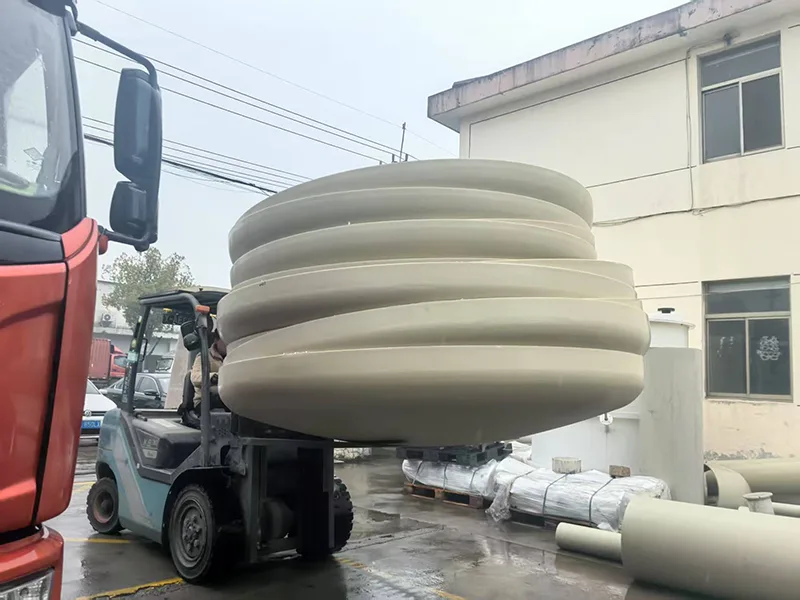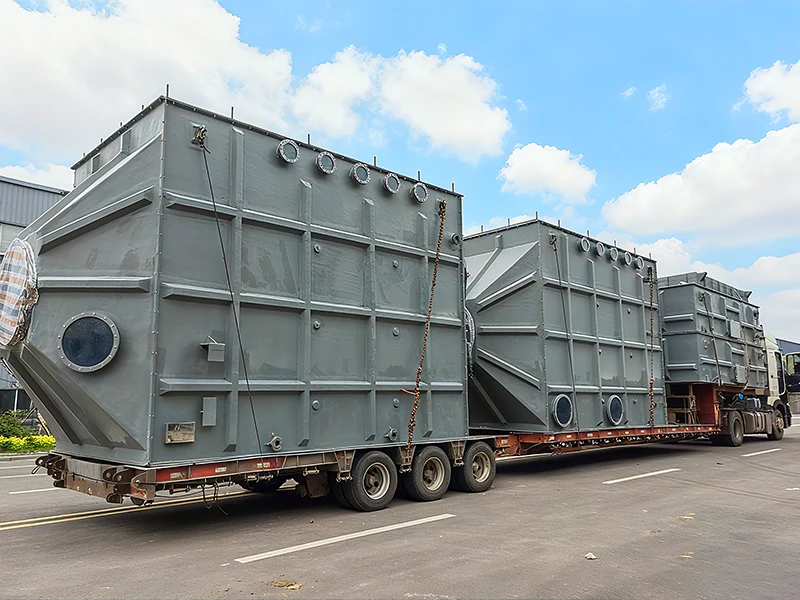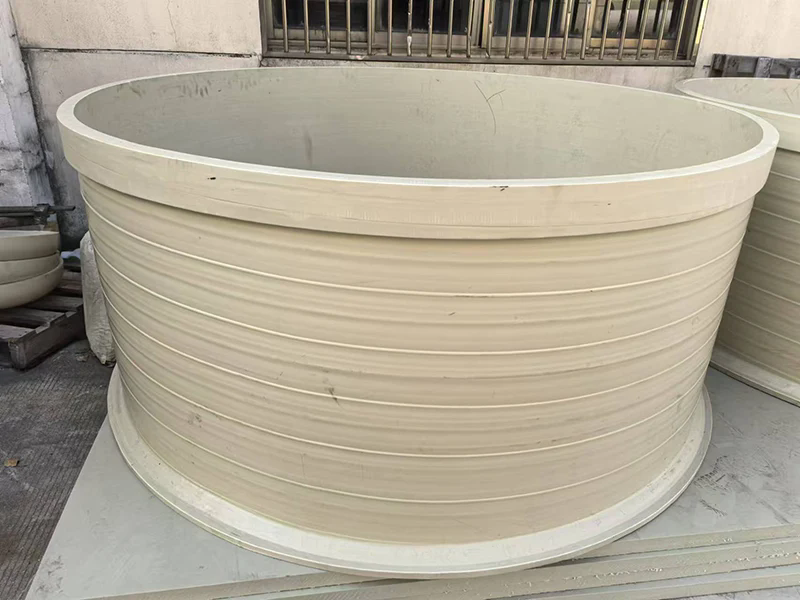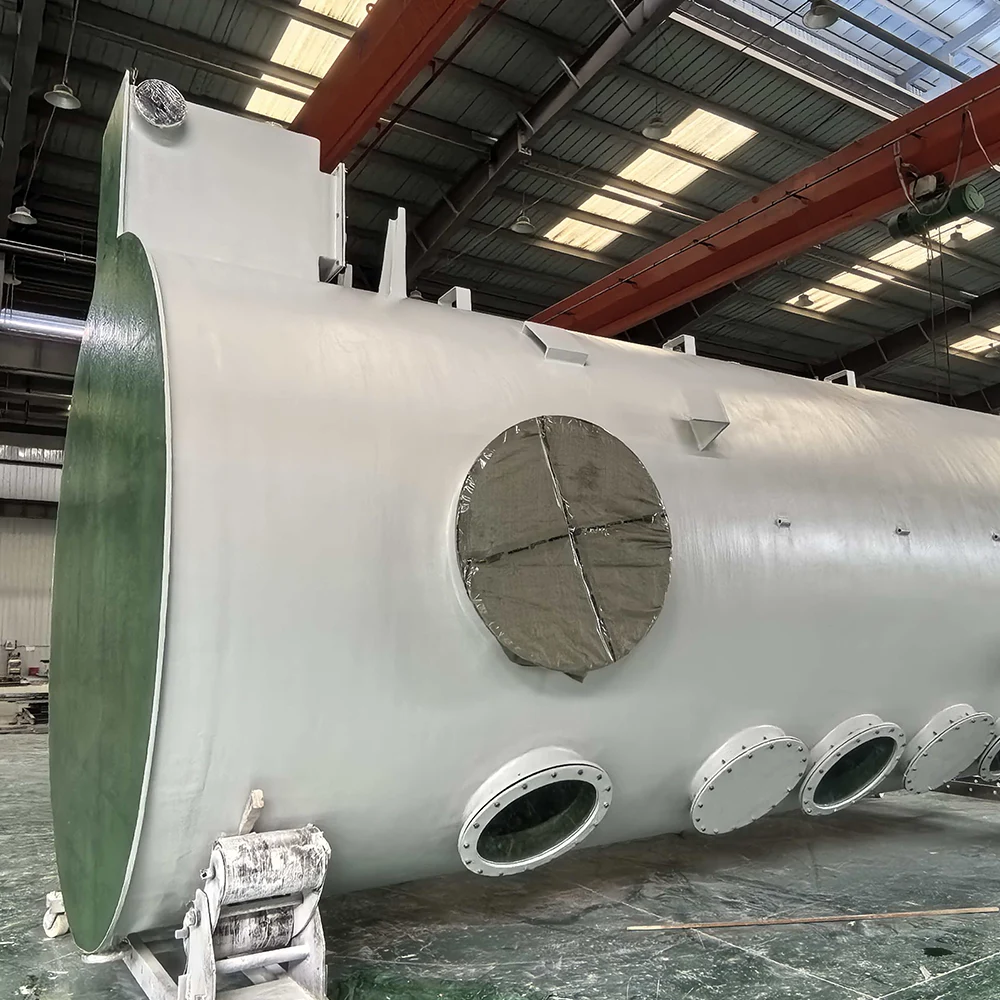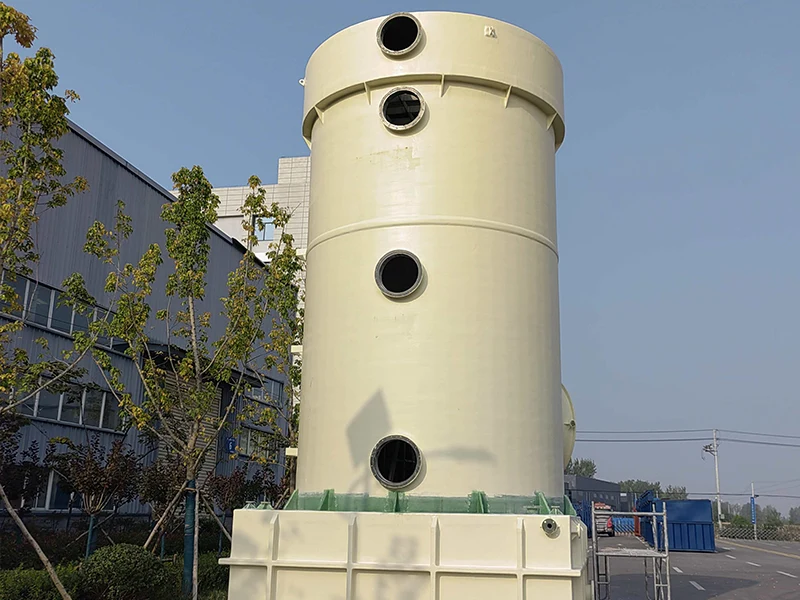
Xinda Chemical factory’s PP Composite FRP Equipment, leveraging the complementary advantages of a polypropylene inner lining and a fiberglass outer layer, combines corrosion resistance, structural strength, and lightweight properties, making it an ideal alternative to traditional metal equipment in the chemical, environmental protection, and new energy sectors. This product can adapt to complex operating conditions, from the storage of highly corrosive media to high-pressure pipeline transportation, providing dual protection for industrial production: internal corrosion protection and external pressure resistance. Welcome to buy PP Composite Fiberglass Storage Tank, FRP Tail Gas Absorption Tower, or FRP Exhaust Gas Purification Tower from our factory.
1. Dual Corrosion Resistance and Strength
The PP Composite FRP Equipment utilizes a composite structure consisting of a polypropylene (PP/PPH) inner lining and a fiberglass reinforced plastic (FRP) outer layer. The polypropylene inner layer provides excellent chemical resistance, capable of withstanding highly corrosive media such as 90% sulfuric acid and 30% sodium hydroxide. The fiberglass outer layer is formed through a winding process to form a high-strength shell with a tensile strength exceeding 200 MPa and a flexural strength exceeding 180 MPa, meeting the required operating pressure of 0.6 MPa. For example, a 10m³ vertical storage tank features a 12mm thick inner lining to ensure medium isolation, while a 25mm thick outer FRP layer ensures structural stability. This results in a 50% increase in overall service life and a 20% reduction in costs compared to pure PP equipment.
2. Seamless Process
Using a one-piece thermoplastic-molded polypropylene inner lining and a seamless spiral-wound FRP outer layer, this type of FRP equipment achieves a seamless, integrated structure with no joints in the inner lining and no seams in the outer layer, completely eliminating the leakage risks associated with traditional welded equipment. For example, the composite pipe utilizes a socket-and-spigot connection. After hot-melt butt welding of the polypropylene inner lining, the outer FRP layer is then wrapped for a secondary seal. The system achieves a leak-tightness rating of 10⁻⁶Pa·m³/s, making it suitable for transporting highly corrosive fluids containing chloride ions. In coastal chemical parks, the leakage failure rate is less than 0.1% per year.
3. Wide Temperature Range and Lightweight Design
Our fiberglass equipment operates within a temperature range of -20°C to 120°C. The polypropylene lining is more resistant to low-temperature brittleness than pure FRP. And the outer FRP layer resists high-temperature deformation even better than pure PP, making it very suitable for intermittent high-temperature conditions. Furthermore, its density is only 1.3-1.5 g/cm³, about one-fifth that of steel equipment, reducing transportation and installation costs by over 40%. For example, a 20 m³ horizontal storage tank weighs only 1.2 tons, and it can be transported by ordinary trucks. On-site lifting eliminates the need for large equipment, shortening the construction period by 30%.
4. Food-Grade Hygiene and Excellent Aging Resistance
The polypropylene lining meets FDA food contact standards. And it offers a smooth, scale-free interior and no heavy metal leaching. This point can make it suitable for handling clean materials such as food additives and pharmaceutical intermediates. The outer FRP layer, infused with UV-resistant additives, retains over 90% of its strength after five years of outdoor exposure, and it can easily eliminate the aging and crack issues associated with pure PP equipment. In juice concentrate production lines, polypropylene composite fiberglass-reinforced plastic (FRP) mixing tanks can withstand 85°C heating and acidic media corrosion while meeting hygiene requirements. Replacing stainless steel equipment reduces annual maintenance costs by 60%.
1. Chemical Industry: Storage and Reaction Systems for Highly Corrosive Media
In the fine chemical, pesticide, and dye industries, PP composite FRP equipment is the preferred choice for strong acid storage tanks and reactors. For example, a dye company uses a 50m³ composite tank to store o-nitrotoluene. The inner lining is resistant to aromatic corrosion. And the outer layer of FRP withstands an operating pressure of 0.4 MPa. The equipment has operated leak-free for six years, with maintenance costs only one-quarter that of titanium alloy tanks. Composite stirred reactors are used for the synthesis of the pesticide glyphosate. The inner lining resists media penetration, while the outer layer supports stirring torque, meeting reaction conditions of 100°C and 0.3 MPa, increasing product purity to 99.5%.
2. Environmental Protection and Water Treatment: High-Salinity Wastewater Treatment and Exhaust Gas Purification
In the environmental protection sector, PP composite FRP equipment can be used in high-salt wastewater storage tanks and acid-base waste gas treatment towers. For example, in landfill leachate treatment projects, composite tanks are used to store concentrated liquid with a pH of 2. The inner lining is made of PP for salt corrosion resistance, while the outer layer is made of FRP to resist atmospheric aging, resulting in an equipment lifespan of over 15 years. Composite waste gas spray towers, with an inner PP layer for acid mist corrosion resistance and an outer FRP support structure, treat mixed waste gases containing HCl and SO₂ with a purification efficiency of 95%, meeting GB 16297-1996 emission standards. After replacing traditional PVC towers in the electronics and electroplating industry, their wind load resistance has increased by three times.
3. New Energy and Marine Engineering: Specialty Media Transportation and Offshore Equipment
In the production of new energy battery materials, polypropylene composite fiberglass pipes are used to transport fluorine-containing electrolytes. The inner PP lining is resistant to organic solvents. The outer FRP layer is high-pressure resistant (working pressure 0.5 MPa), so it can prevent metal ion contamination of battery materials. In marine engineering, composite storage tanks are used to store oily wastewater from drilling platforms. The inner PP layer resists seawater corrosion, while the outer FRP layer resists wind and wave impact. The lightweight design reduces the platform's load, reducing weight by 40% compared to steel tanks and increasing installation efficiency by 50%.
4. Food and Pharmaceuticals: Clean Material Transportation and Sterile Reactions
Because its inner lining meets GMP hygiene standards, PP composite FRP equipment can be used in applications such as pharmaceutical intermediate crystallization tanks and food-grade syrup storage tanks. For example, a pharmaceutical company uses composite crystallization tanks to produce cephalosporin antibiotics. The lining is smooth and has no dead corners, and can withstand 121°C steam sterilization. The outer layer of FRP insulation reduces heat loss and reduces energy consumption by 25%. The food industry's composite piping system is used to transport concentrated fruit juice, the use of this system can avoid oxidation contamination of metal pipes and ensuring the stability of product color and flavor. It has passed SGS hygiene testing and complies with EU EC 10/2011 standards.