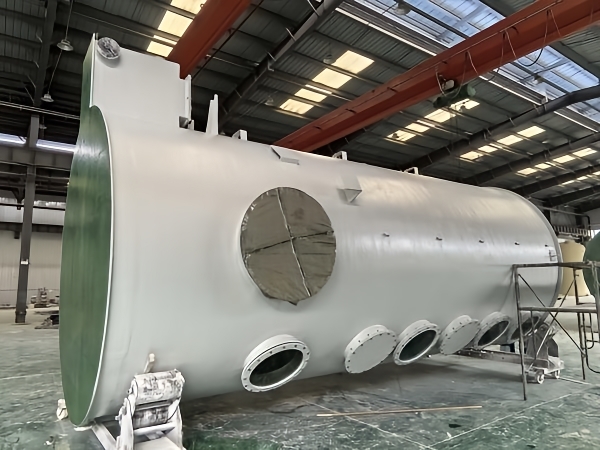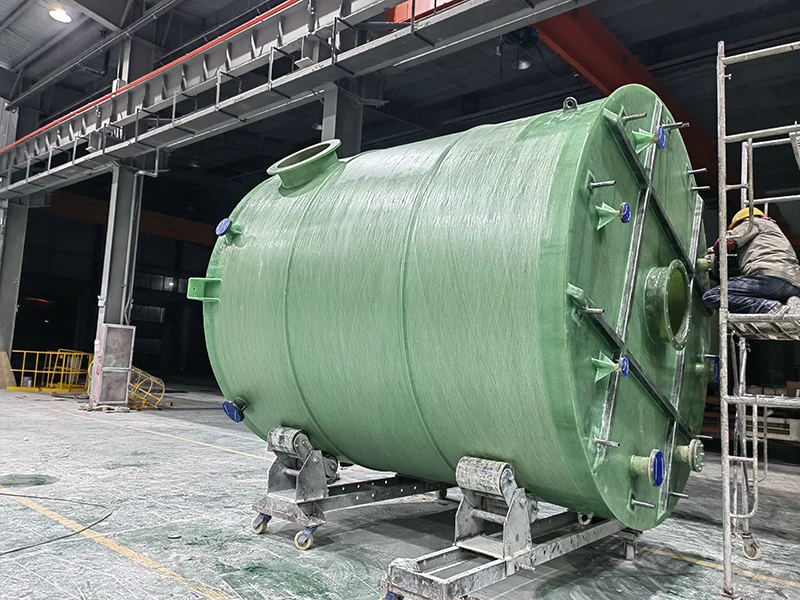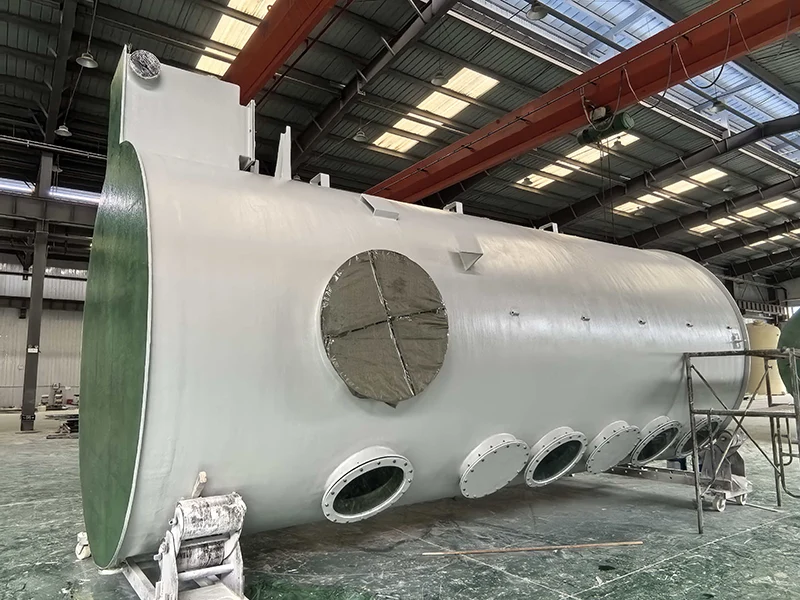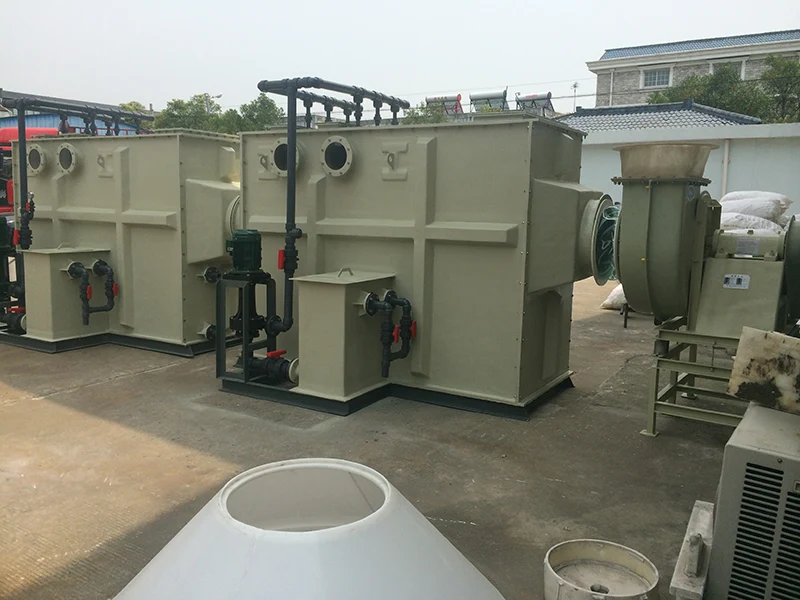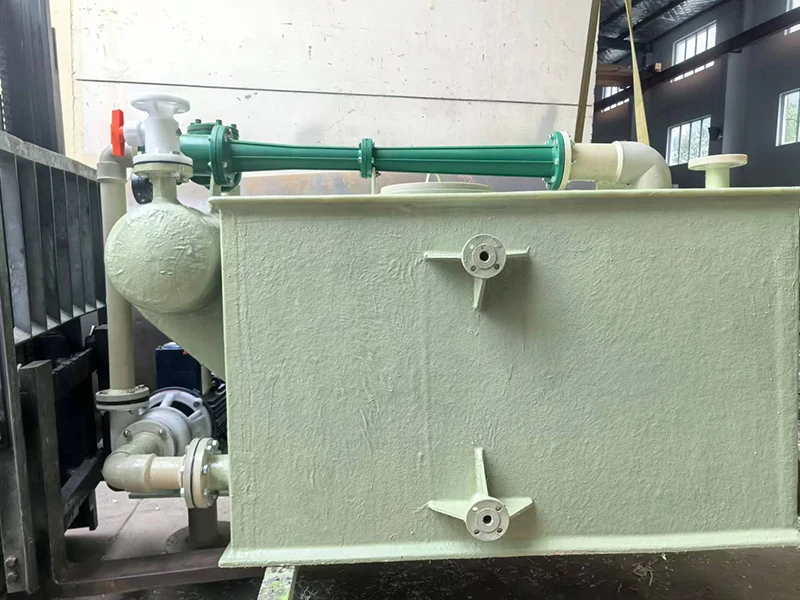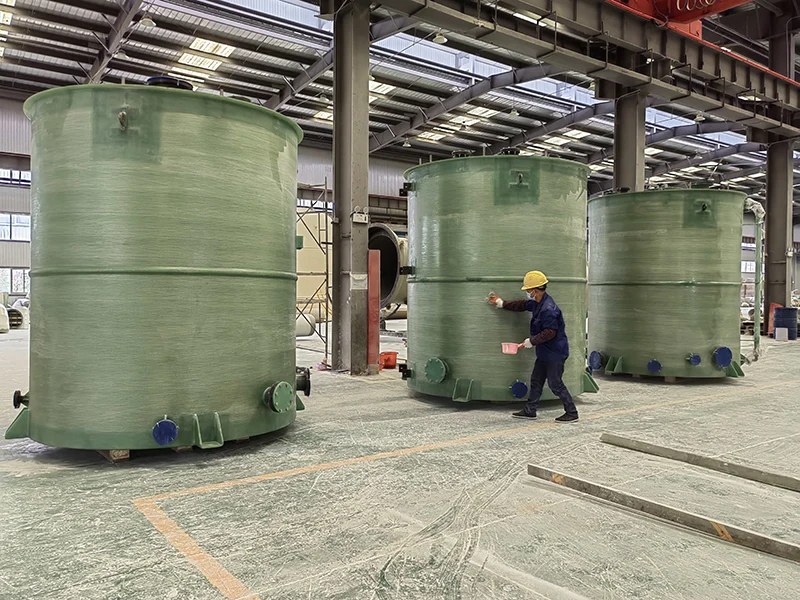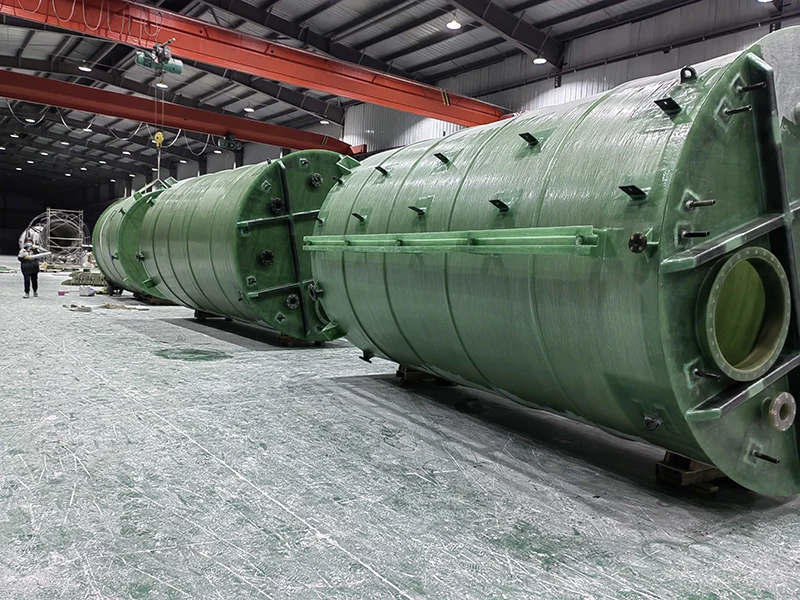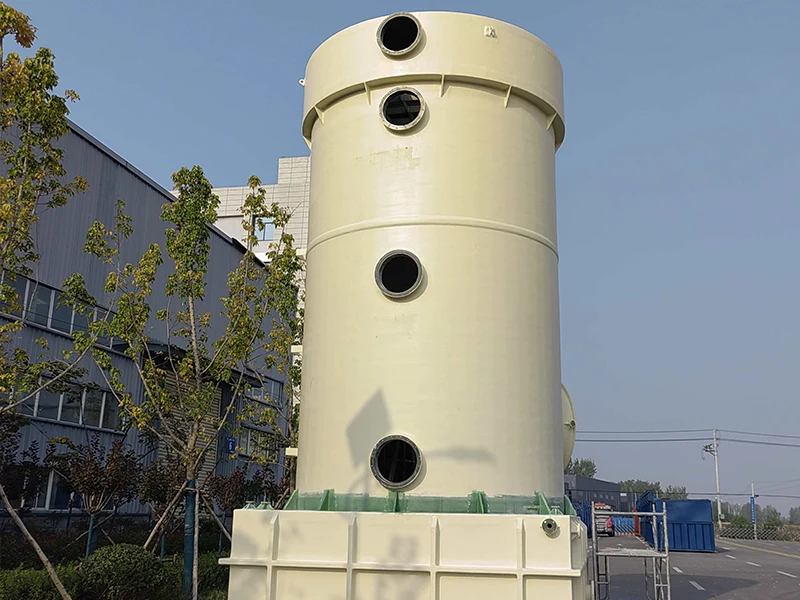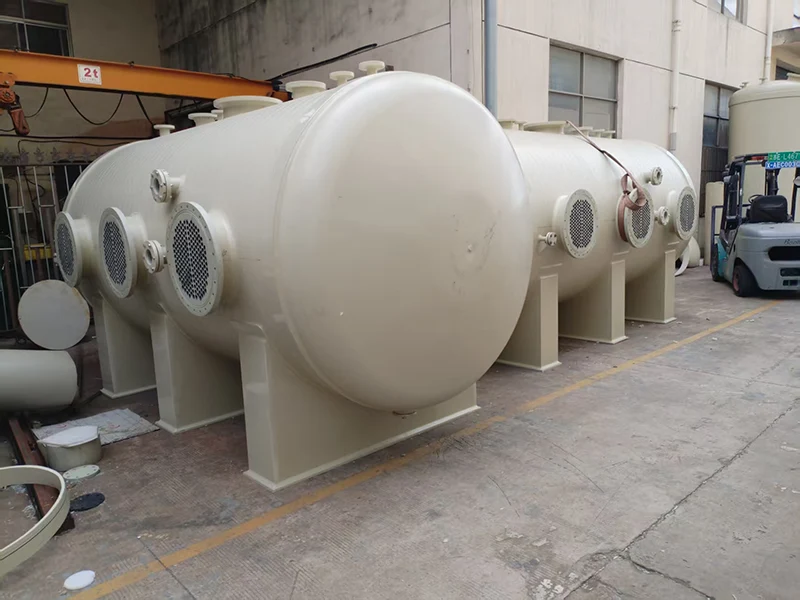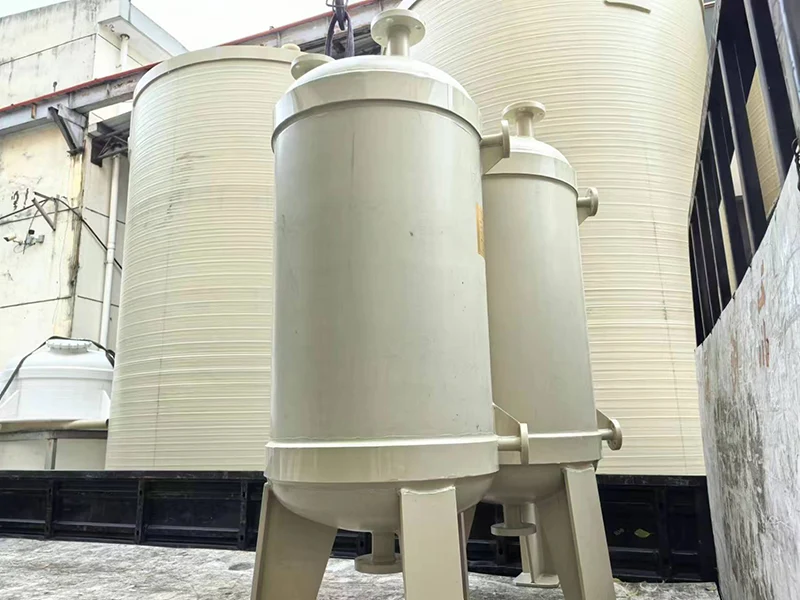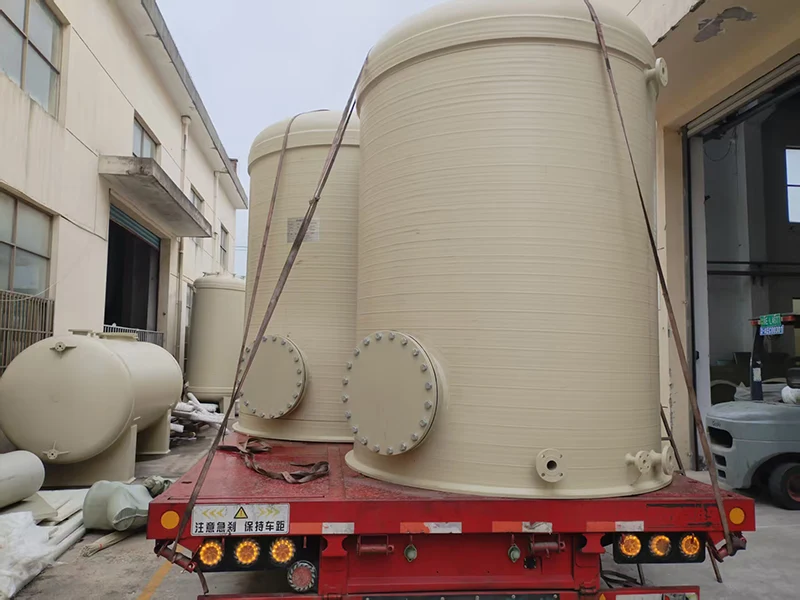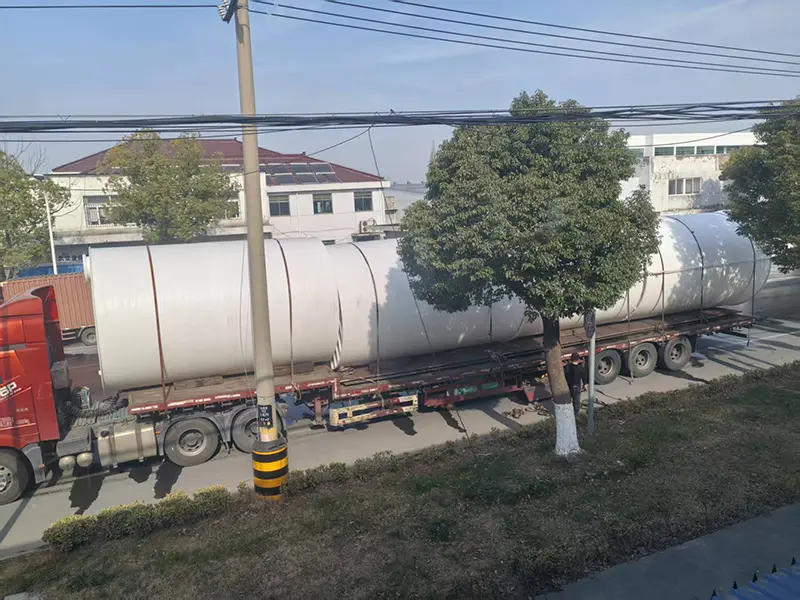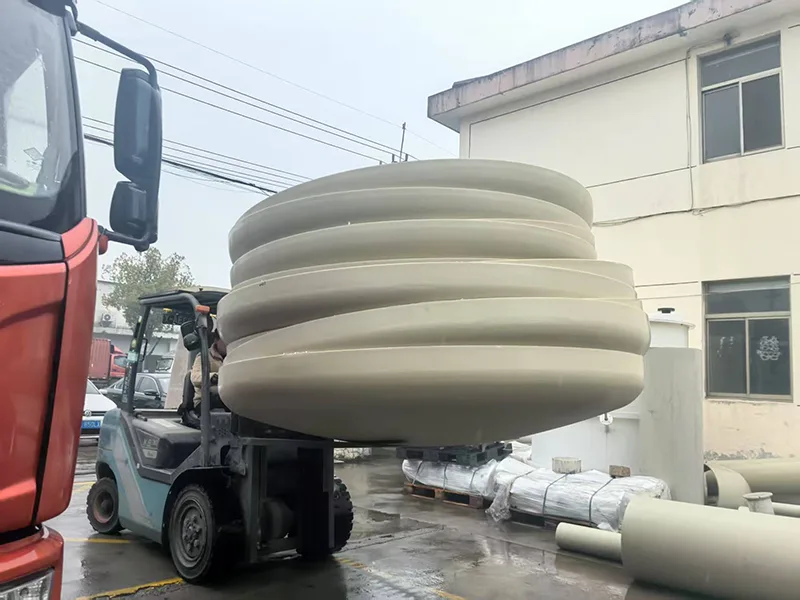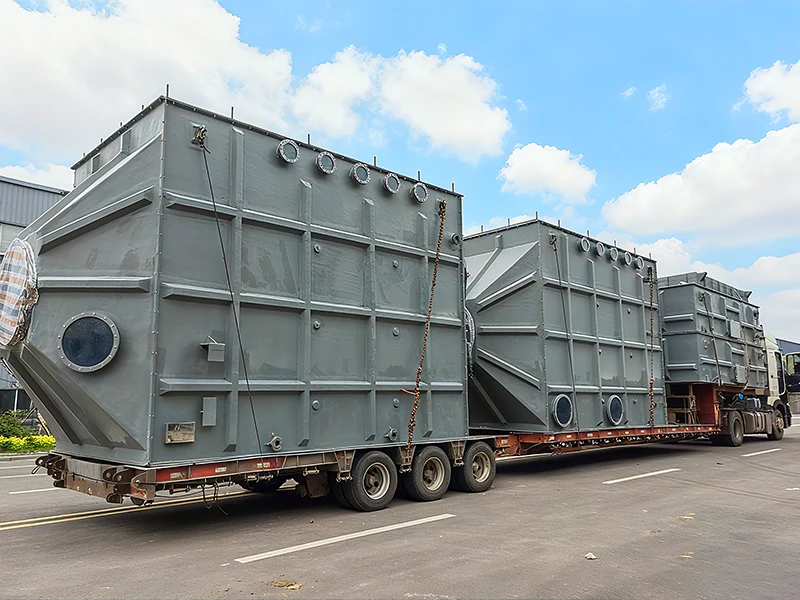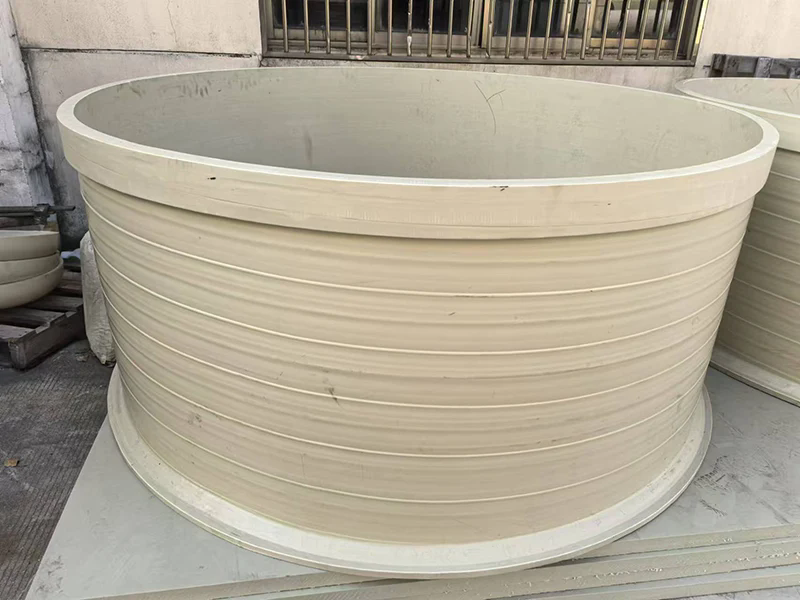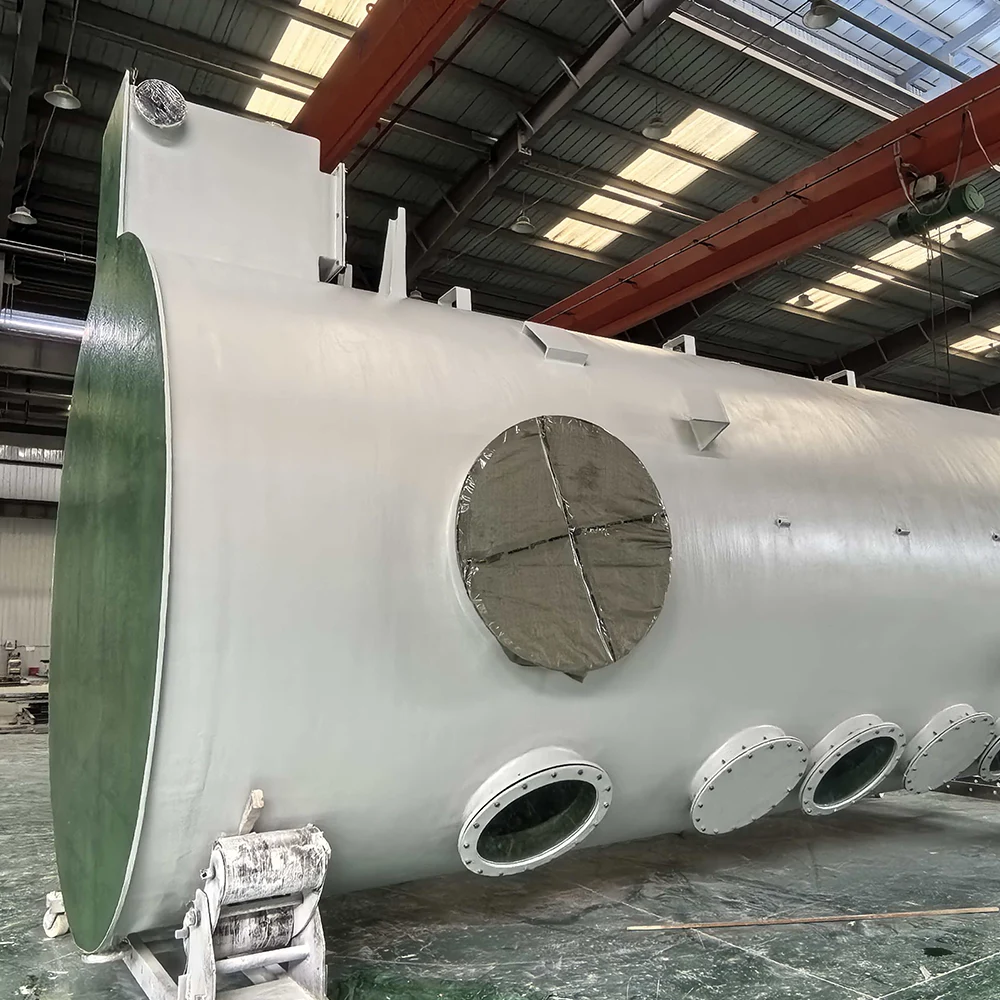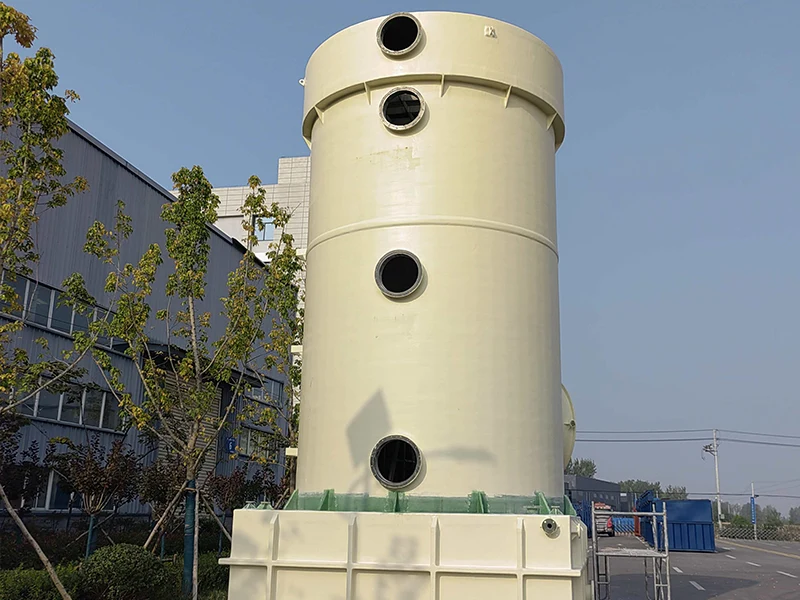
Xinda Chemical's FRP equipment made in China is a prime example of fiber-reinforced plastic composite materials. Its lightweight, high-strength, corrosion-resistant, and flexible design make it a key component in environmental protection, chemical engineering, and marine engineering. And its product highlights lie in its material composite advantages and process innovations. The applications range from extreme corrosive environments to precision structural support, providing safe and cost-effective solutions for industrial production. We offer products such as Fiberglass Anti-Corrosion Fans, Fiberglass Storage Tanks, and Vertical Fiberglass Storage Tanks.
1. Perfect Balance of Lightweight, High Strength, and Structural Stability
This FRP equipment has a relative density of only 1.5-2.0 g/cm³, approximately one-fourth to one-fifth that of carbon steel. However, its tensile strength can reach over 400 MPa, approaching or even exceeding that of carbon steel. And its specific strength is comparable to that of high-grade alloy steel. This property enables this kind of equipment to reduce its weight while maintaining structural stability. For example, a large FRP tank weighs only one-third of a steel tank of the same volume, reducing infrastructure costs by over 30%. It is particularly suitable for load-sensitive applications such as high-rise factories and offshore platforms.
2. Excellent Corrosion Resistance
The matrix resin of this type of equipment, when combined with glass fiber, offers excellent resistance to air, water, moderate concentrations of acids, alkalis, salts, and various organic solvents. For example, vinyl ester resin-based FRP equipment can withstand long-term corrosion from 98% concentrated sulfuric acid and 30% hydrochloric acid.
3. Outstanding Design Flexibility and Process Adaptability
It can be formed through a variety of processes, including winding, compression molding, and hand lay-up. So it can make sure flexible design of structural shapes to meet specific requirements, such as custom-shaped storage tanks, large pipelines, and complex curved components, and then achieve product integrity and functional integration. For example, a fiberglass reinforced plastic (FRP) exhaust gas purification tower can be integrally molded with a spray layer, filler layer, and demisting layer, reducing assembly seams. The system also supports customized resin types based on media characteristics, and adapts to operating environments ranging from room temperature to 150°C.
4. Thermal and Electrical Performance Expands Applications
FRP equipment has a low thermal conductivity (1.25-1.67 kJ/(m·h·K)), only 1/100-1/1000 of that of metal. So this feature can make it an excellent thermal insulator suitable for low-temperature media storage or high-temperature pipeline insulation. It also possesses excellent electrical insulation (dielectric strength 15 kV/mm) and microwave transparency, making it indispensable in applications such as radar antenna covers and high-voltage insulation components.
1. Environmental Protection and Water Treatment
FRP equipment is widely used in environmental protection applications, like water supply and drainage pipes, sewage treatment tanks and so on. For example, FRP sand-filled pipes can be used in municipal engineering to transport sewage. They are resistant to acid and alkali corrosion. And they have smooth and scale-free inner walls. At the same time, they can achieve 20% lower flow loss than concrete pipes. The FRP-packed towers in biological deodorization equipment utilize microorganisms to degrade odorous substances. Combined with their resistance to bioerosion, they achieve a treatment efficiency exceeding 95% and then can easily eliminate the risk of secondary contamination.
2. Chemical Engineering and Anti-corrosion Engineering: A "Safety Barrier" in Extremely Corrosive Environments
In industries such as chlor-alkali, fertilizer, and pharmaceuticals, this type of equipment is core equipment for handling highly corrosive media. For example, a chemical company replaced concrete electrolytic cell covers with fiberglass reinforced plastic (FRP), solving the problem of electrolyte contamination caused by corrosion from traditional materials. The equipment has operated continuously for eight years without any problems. FRP pipes are widely used to transport media such as hydrochloric acid and caustic soda. These pipes are with diameters ranging from 400 to 1400 mm. Germany incorporated FRP into its official standards as early as 1983, proving its reliability.
3. Marine and Ship Engineering: The Dual Advantages of Salt Spray Resistance and Lightweight
In marine environments, glass fiber reinforced plastic machines (FRP) offer significantly better resistance to salt spray and seawater corrosion than metal materials. For example, the pretreatment piping and reverse osmosis system pressure vessels in desalination plants are made of FRP, which can withstand corrosion from high-salinity seawater and has a service life over five times that of carbon steel. Small FRP yachts utilize FRP's lightweight and high-strength properties to increase speed by 15% while reducing fuel consumption.
4. Construction and Specialty Industries: Functional Integration and Structural Innovation
In the construction sector, FRP equipment can be made into skylights, corrosion-resistant purlins, cooling towers, and more. For example, FRP purlins used in rolling mills and pickling plants boast an axial bending strength of 250 MPa, are resistant to acid and alkali corrosion, and have a service life exceeding 10 years without the need for regular painting and maintenance. In the aerospace sector, FRP, due to its high specific strength, is used in rocket casings and satellite components, reducing weight by 20% to 30% and increasing payload.